
Executive Summary
The recent ransomware attack on critical infrastructure serves as a stark reminder of the vulnerabilities present in essential services. This blog post provides a thorough analysis of the attack, including its technical mechanisms, potential impacts on operations and society, and recommended steps for mitigation to fortify defenses against future incidents.
Technical Breakdown
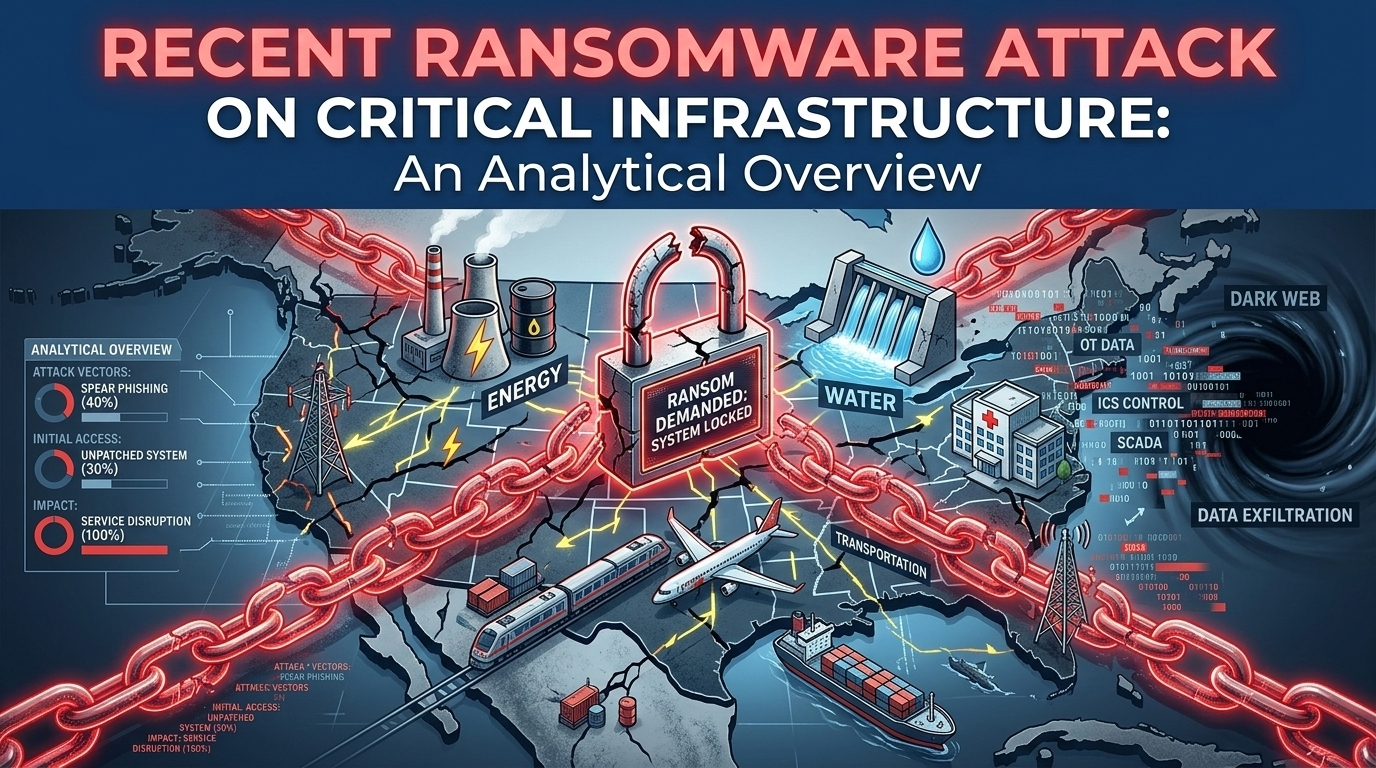
Reports indicate that the ransomware variant employed in the attack utilized advanced encryption techniques to render data inaccessible. Initial analysis suggests the use of double extortion tactics, where attackers not only encrypt the data but also threaten to publish stolen information unless a ransom is paid. The attack vector appears to have been a phishing email that tricked employees into executing malicious software, granting attackers a foothold within the network.
Upon infiltrating the network, the ransomware spread laterally, exploiting known vulnerabilities in legacy systems. The attack leveraged weak passwords and unpatched software, which facilitated the rapid deployment of the ransomware across multiple machines connected to the network.
Impact Assessment
The ramifications of this attack extend beyond immediate operational disruptions. Critical services were halted, affecting healthcare systems, utilities, and emergency response efforts. The potential for data breaches raises concerns regarding regulatory compliance and the implications of compromised sensitive information.
On a broader scale, the attack underscores vulnerabilities in the interconnected nature of critical infrastructure, suggesting that a single breach can have cascading effects. The potential financial impact may run into millions, factoring in ransom payments, recovery costs, and lost revenue due to system downtime.
Mitigation Recommendations
Conclusion
The recent ransomware attack on critical infrastructure highlights the urgent need for organizations to bolster their cybersecurity protocols. By implementing comprehensive strategies focused on prevention, detection, and response, organizations can enhance their resilience against future threats and safeguard vital services for society.