
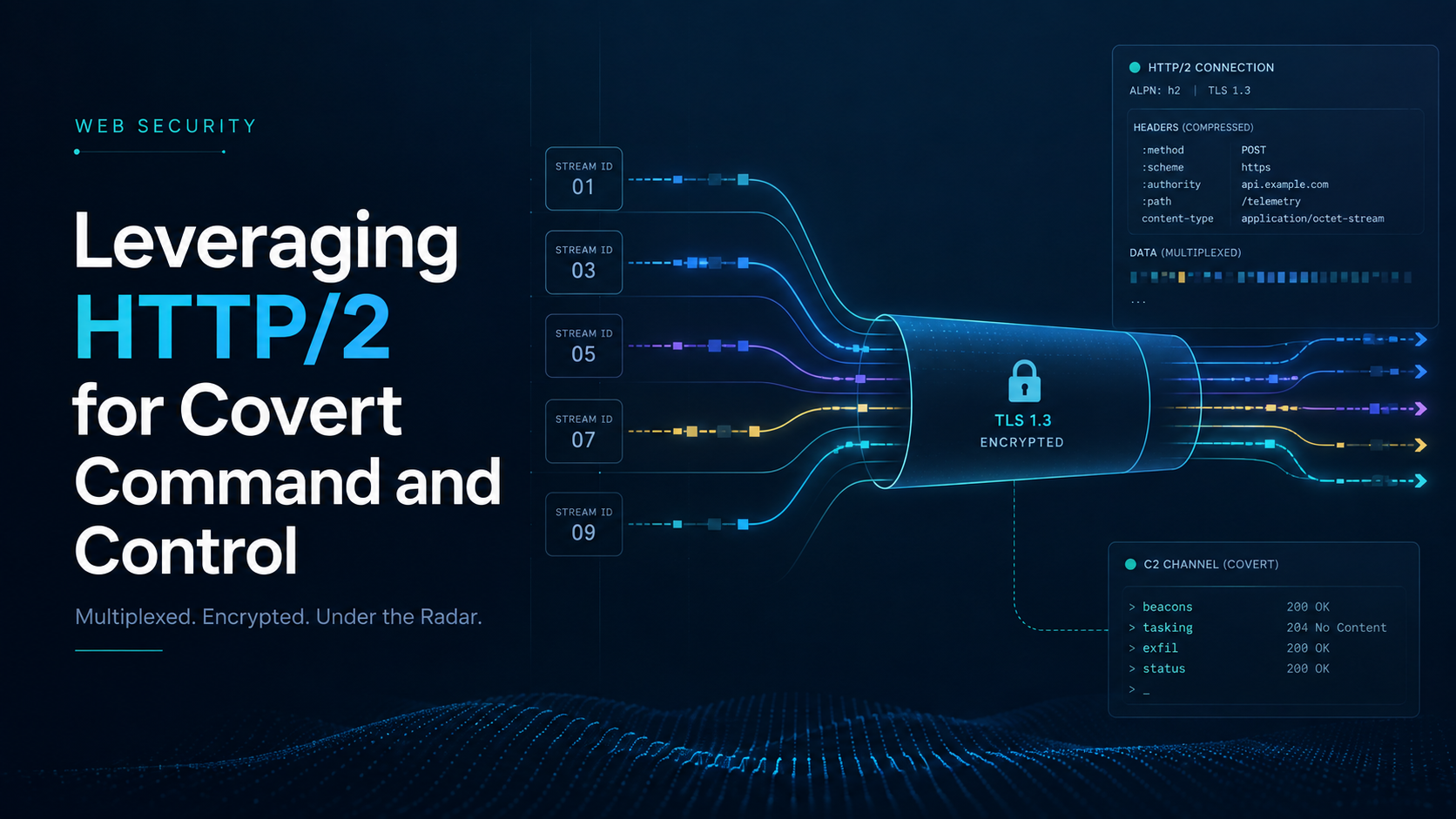
In the realm of cybersecurity, attackers are constantly evolving their techniques to evade detection. One such method involves leveraging the less scrutinized features of HTTP/2 for setting up covert command and control (C2) channels. Despite numerous advancements in security technologies, attackers find creative ways to adapt, and HTTP/2 provides a fertile ground for innovation in C2 communications.
Understanding the Basics of HTTP/2
HTTP/2, the successor to HTTP/1.1, was designed to improve user experience by reducing latency and optimizing resource utilization. It introduces features such as multiplexing, header compression, and server push, which are beneficial for performance but also open new avenues for misuse by attackers.
Multiplexing allows multiple requests and responses to be sent over a single connection simultaneously, which can be exploited to hide malicious traffic among legitimate interactions. Header compression reduces the size of HTTP headers, enabling attackers to obfuscate their communications, while server push allows servers to send data to clients proactively, which can be abused for unsolicited command delivery.
GET /exploit?cmd=ls HTTP/2
Host: victim.example.com
User-Agent: Mozilla/5.0
Accept: */*
Tuning HTTP/2 for Covert C2 Channels
Attackers exploit HTTP/2's multiplexing to blend their C2 traffic with normal web traffic, making it difficult for network security tools to differentiate between harmless and harmful data streams. Specifically, they can interleave commands within legitimate requests and responses, taking advantage of the fact that HTTP/2 connections are persistent and can be long-lived.
Moreover, by utilizing header compression, attackers can minimize the footprint of their control commands, further obscuring detection efforts. For instance, commands and responses can be embedded in compressed headers, passing under the radar of systems not specifically configured to inspect such details.
HTTP/2 200 OK
Content-Type: application/json
Content-Encoding: gzip

[compressed payload]
Detecting HTTP/2 Based C2 Traffic
Detecting covert channels in HTTP/2 traffic requires adapted monitoring strategies. Traditional inspection tools might not be sufficient due to HTTP/2's complexity and the use of encrypted connections. Network defenders need to employ advanced SSL/TLS inspection tools capable of parsing HTTP/2 streams.
Signature-based detection might fall short, so anomaly detection models based on machine learning can be a more effective strategy. These models can establish baselines of normal HTTP/2 usage patterns and flag deviations indicative of potential C2 activity.
Furthermore, monitoring for unusual HTTP/2 behaviors, such as unexpected server pushes or abnormal patterns in header compression ratios, can also provide clues. Security teams should be trained to recognize these patterns and configure their tools to alert on such anomalies.
Practical Defensive Measures
To mitigate the threat of HTTP/2-based C2 channels, organizations should take the following practical measures:
- Implement comprehensive SSL/TLS decryption to allow inspection of encrypted HTTP/2 traffic.
- Deploy advanced network traffic analysis tools that support HTTP/2 protocols.
- Regularly update and configure intrusion detection systems to recognize HTTP/2 attack patterns.
- Train security personnel to understand and identify HTTP/2 features that can potentially be exploited.
- Work with vendors to ensure security products are updated to handle HTTP/2 traffic effectively.
Next Steps for Security Practitioners
Security practitioners should prioritize integrating HTTP/2 into their threat monitoring and incident response protocols. By keeping abreast of how HTTP/2 can be misused and ensuring that their detection capabilities are up to date, defenders can better protect their networks from covert C2 channels. Regularly engaging with the information security community and sharing insights on HTTP/2 threats will also bolster defenses and contribute to a more secure environment.