
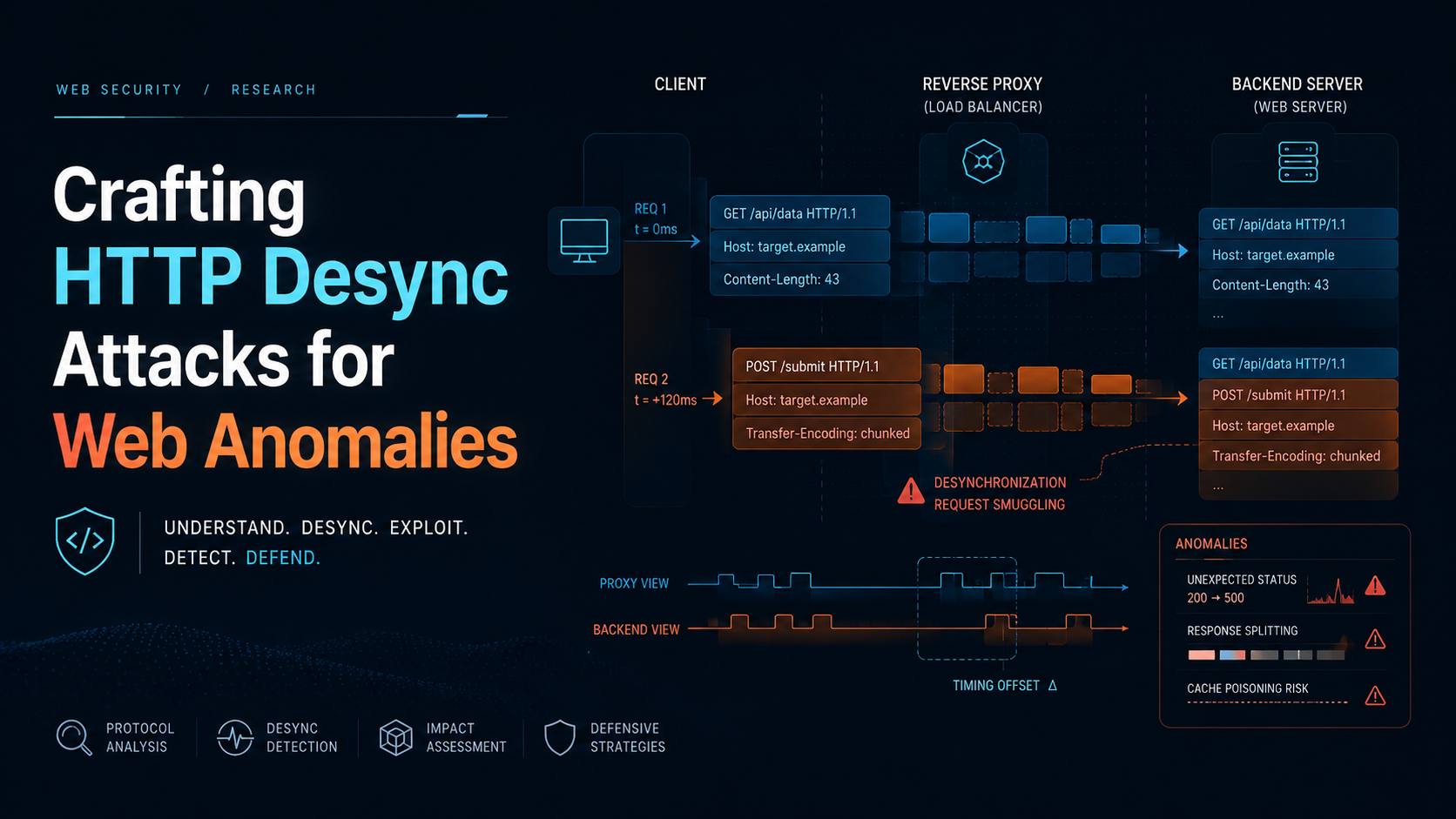
Imagine you’re conducting a penetration test on a corporate web application. Browsing through the server responses, you notice something odd: seemingly random discrepancies in how requests are processed. These anomalies could indicate HTTP desynchronization issues—an often overlooked vulnerability with potentially severe consequences.
Understanding HTTP Desynchronization
HTTP desynchronization occurs when there is a mismatch in how a sequence of HTTP requests is interpreted between different components of a web application infrastructure. This can be exploited to cause misrouting of requests, cache poisoning, or even data leakage. Understanding the mechanics behind this is crucial for effective exploitation.
HTTP request processing typically involves a frontend server (such as a load balancer) and one or more backend servers. A desync happens when these components parse the incoming HTTP requests differently, often due to differences in handling headers or payloads.
A common scenario involves the abuse of the Content-Length and Transfer-Encoding headers. If the frontend and backend parse these headers differently, they might disagree on where one request ends and another begins, leading to unexpected results.
Identifying Desync Vulnerabilities
The first step in exploiting HTTP desync attacks is identifying potential vulnerabilities. This involves probing the application for signs of misalignment between the request handling processes. Tools like Burp Suite or OWASP Testing Guide can help in automating some of these tasks.
Start by crafting requests with conflicting Content-Length and Transfer-Encoding headers, and observe how the server responds. Responses that vary unexpectedly or indicate processing errors provide clues that desync issues might be present.
Additionally, tamper with request headers and payloads to see if you can trigger any anomalies in server behavior. Look for discrepancies such as partial responses, errors, or delayed processing.
Crafting a Desync Attack
Once a potential desync vulnerability is identified, the next step is crafting a successful attack. This involves carefully constructing HTTP requests that cause servers to desynchronize in processing subsequent requests.
Consider the following request, which combines techniques to exploit desync vulnerabilities:
POST /api/submit HTTP/1.1
Host: example.com
Content-Length: 13
Transfer-Encoding: chunked

0

GET /confidential HTTP/1.1
Host: example.com
This request uses conflicting Content-Length and Transfer-Encoding headers to trick the server into misinterpreting where the first request ends and the next begins, potentially exposing sensitive endpoints or data.
Testing different variations and observing the server's behavior is key. Adjusting the request structure and headers can lead to different outcomes, revealing the server’s request handling logic.
Impact and Mitigation
The impact of exploiting HTTP desync vulnerabilities can be significant. Successful attacks might lead to data leakage, unauthorized access to restricted areas, or even complete server compromise. As such, it’s crucial for organizations to understand and mitigate these risks.
To prevent desync vulnerabilities, ensure that all components of your web infrastructure have consistent request parsing logic. Regularly patch and update server software to close known vulnerabilities. Utilize web application firewalls (WAFs) to detect and block malformed requests.
Monitoring server logs for anomalies in request processing can alert to potential desync attempts. Specifically, look for discrepancies in request lengths and unexpected HTTP method sequences.
Next Steps
Now that you understand HTTP desync attacks, consider incorporating these tests into your regular security assessments. Familiarize yourself with tools that automate desync vulnerability detection and ensure you’re equipped to both identify and exploit these issues responsibly. Stay updated with the latest research and community findings on HTTP desynchronization to refine your approach and enhance your penetration testing toolkit.